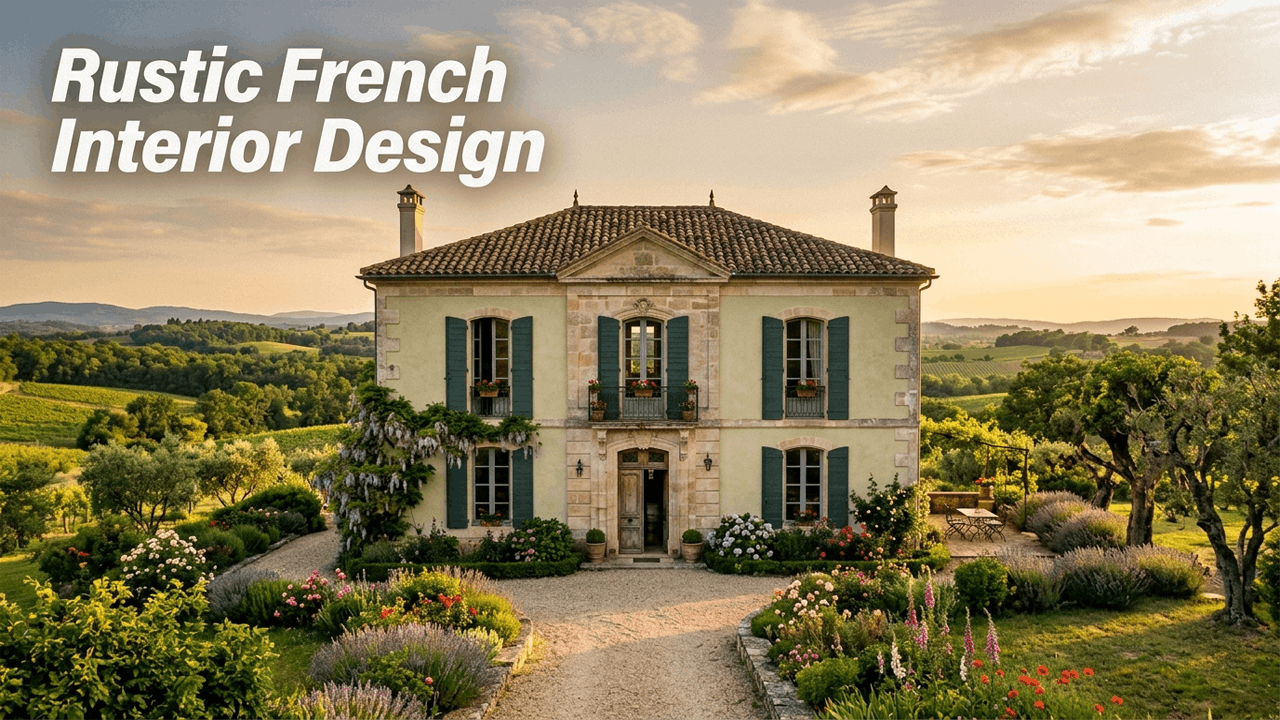
A rustic manor house in southern France with layers of sensitive decoration
In a quiet village in the lush green Chalosse region of southern France, a maison de maître built in 1806 is now a timeless beauty – and all the credit goes to renowned interior designer Benji Lewis.
This blog is a visual and emotional journey in which Benji not only restored a rundown manor but also respected every crack, every faded corner.
1. The Charm of a Maison de Maitre: Structure & Soul
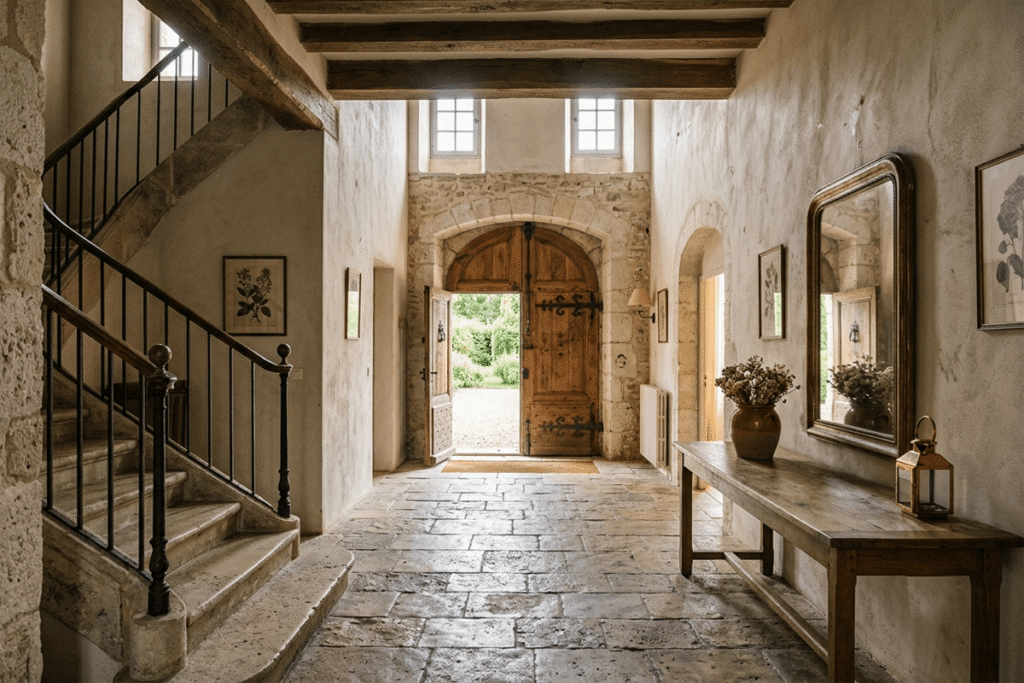
Built in 1806, this symmetrical four-up, four-down manor house is preserved in its original layout. Both sides have wings – formerly barns and storage areas. Benji converted one of these to create a warm, rustic kitchen with a mezzanine office and a huge fireplace.
The structure is typical of manor homes in Southern France – a central hallway, tall windows, high ceilings and traditional lime render on the exterior.
It feels like it was always meant to be a kitchen,” says Benji. In the kitchen, reclaimed materials such as cupboard curtains made from old Hungarian grain sacks give the space an organic authenticity. Behind the curtains are copper pots, regional ceramics and utensils sourced from local brocante, making this kitchen modern yet nostalgic.
On the kitchen floor, reclaimed 18th-century roomettes, wall tiles are modern but carefully selected from Topps Tiles UK to match regional colours. A charming detail: the door next to the sink opens directly into the back garden, allowing light and air to flow freely.
2. Zoom That Room: Interior Design at Your Fingertips
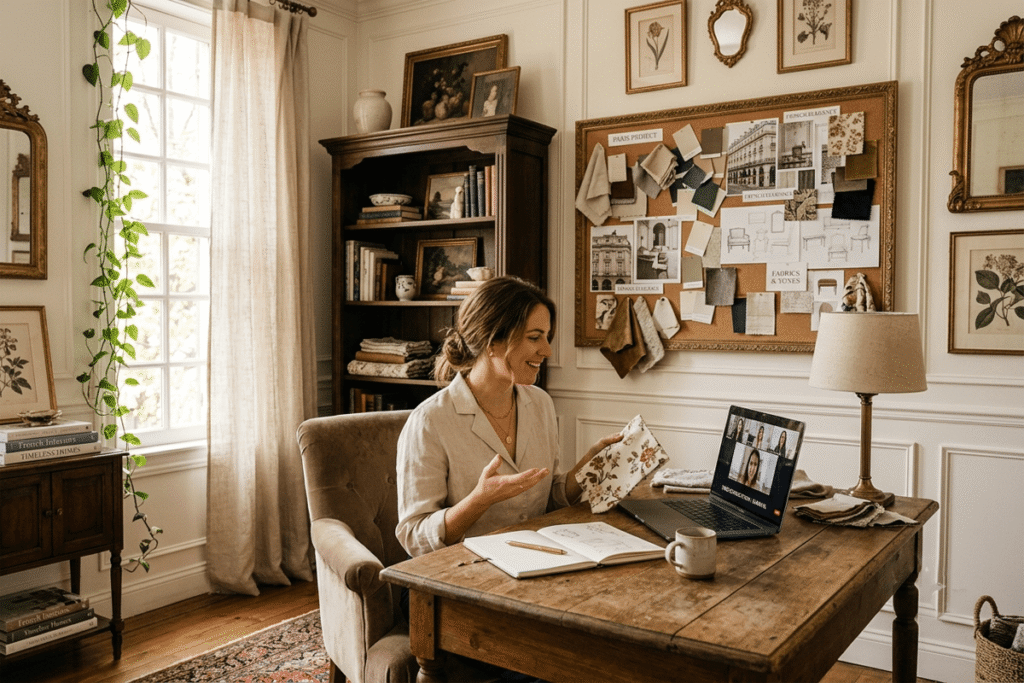
During the lockdown, when the world was locked inside the house, Benji launched a very creative and thoughtful idea – Zoom That Room, an online interior consultancy where he guides clients via video call.
“It will take at most half an hour to observe and talk to suggest something that can bring real changes”, Benji says.
Whether it is adding a lamp or shifting a painting, Benji’s magic works everywhere. This consultancy is the result of his keen eye and quick adaptability, which he applies to every type of interior.
2.1 Love at first sight: Discovery of the House
Benji found this house in an ad in a local newspaper. When he saw it, the weather was bad, the rain was falling through golf ball-sized holes in the roof, but Benji still felt “this is the house I was waiting for.”
He said he had an old connection with the region; his parents had also bought a farmhouse there. There were four lime trees in the garden, of which the three were removed and one was kept for shade – a classic Benji-style decision.
2.2 Battle with Dampness: The First Step of Restoration
The condition of the house was critical. Moisture, damp, and overgrowth made every corner a challenge. A trusted local builder and friend took on the responsibility of restoration.
Steps taken:
- Modern ceramic tiles were removed, and a breathable layer of gravel and slate was created.
- Tomettes (terracotta tiles) were used, which brought back the 18th-century charm.
- Exterior cement was removed, and a traditional lime render was applied – which makes the house “breathe”.
Benji said: “A house like this needs to breathe, not be smothered.”
Also Read: 12 Modern Farmhouse Living Room Ideas for a Cozy Home
3. Petit Salon & Salle a Manger: Unpeeling the Layers
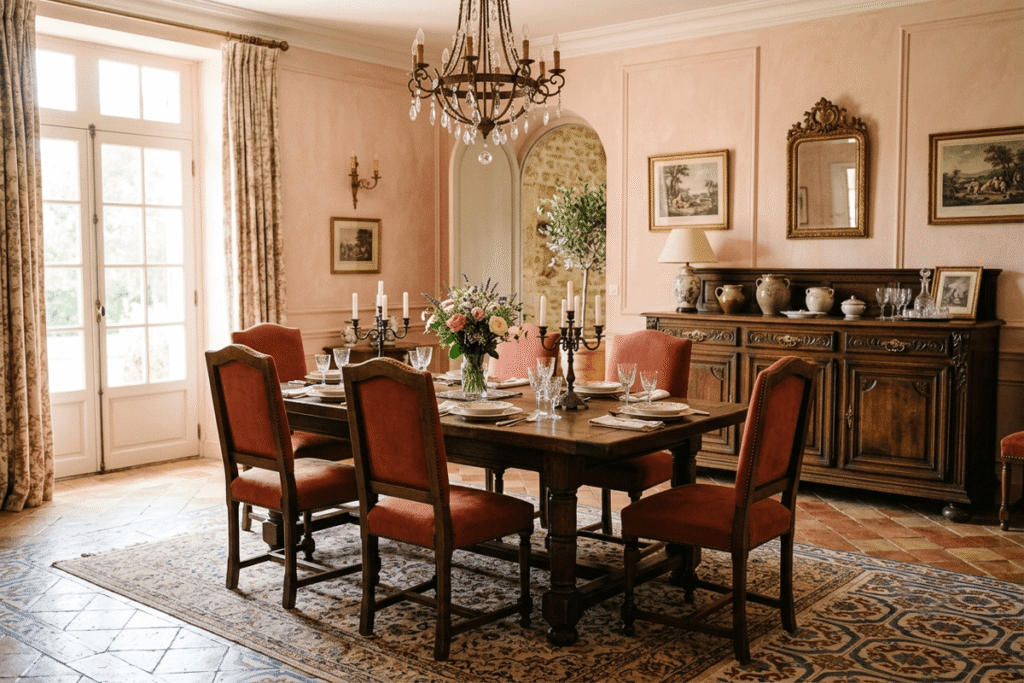
These two rooms on either side of the hall – Petit Salon (small formal sitting room) or Salle-à-Manger (dining room) – became treasure chests for the design. Their walls were partially stripped to reveal the old decorative layers.
- Shell-pink paint in dining room, Spanish dado tiles and Greek key floor tiles remain intact.
- Furniture: 19th-century Basque table & chairs with terracotta red upholstery.
- An antique Spanish painted sideboard and metal drinks trolley add old-world character
- “This patchwork works because the colours harmonise perfectly,” says Benji.
3.1 Life in France: Benji’s Personal Story
Benji has lived in France since the 1990s. He first moved with his French partner, and now he and his partner David – who manages an urban regeneration project in the UK – split their time between France and Berkshire (UK). David’s tech skills have allowed him to adapt to a remote working lifestyle and handle this restoration project.
4. The Heart of the Home: Kitchen & Mezzanine Office
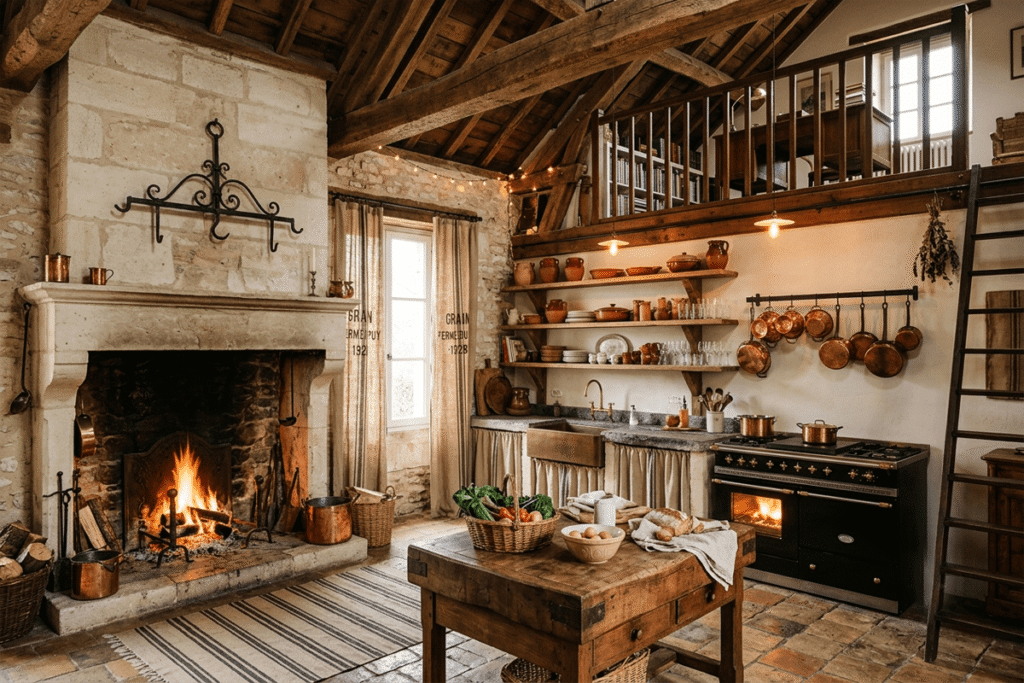
The kitchen saw a major transformation: A huge fireplace was added for both warmth and visual impact. The mezzanine level is where Benji’s personal office is – a creative hub with a view. Open shelves, exposed beams, and rustic textures made the kitchen one of the most inviting spots.
Curtains beneath a sink from vintage Hungarian grain sacks, wall-mounted ceramics, and natural light add a lived-in charm. It feels like a place that’s always been meant for cooking and conversation.
4.1 The Benji Lewis Kaleidoscope: Style, Quirk & Culture
Benji’s style is eclectic, including:
- Plastic giraffe candlestick on dining table. *Painted red cardboard column in the hall, from a local brocante.
- Vintage Indian painting on silk landing.
- 18th-century Italian gilded mirror + Basque blue chair Drawers from Eastern Europe Casa
- Pupo table lamp with home-made shade.
- Oyster baskets below the side table, covered in vintage linen.
Each item comes with a story, or is carefully selected from a brocante.
Also Read: 9 Modular Kitchen Decor Ideas to Transform Your Cooking Space
5. Bedrooms: A space worth cherishing
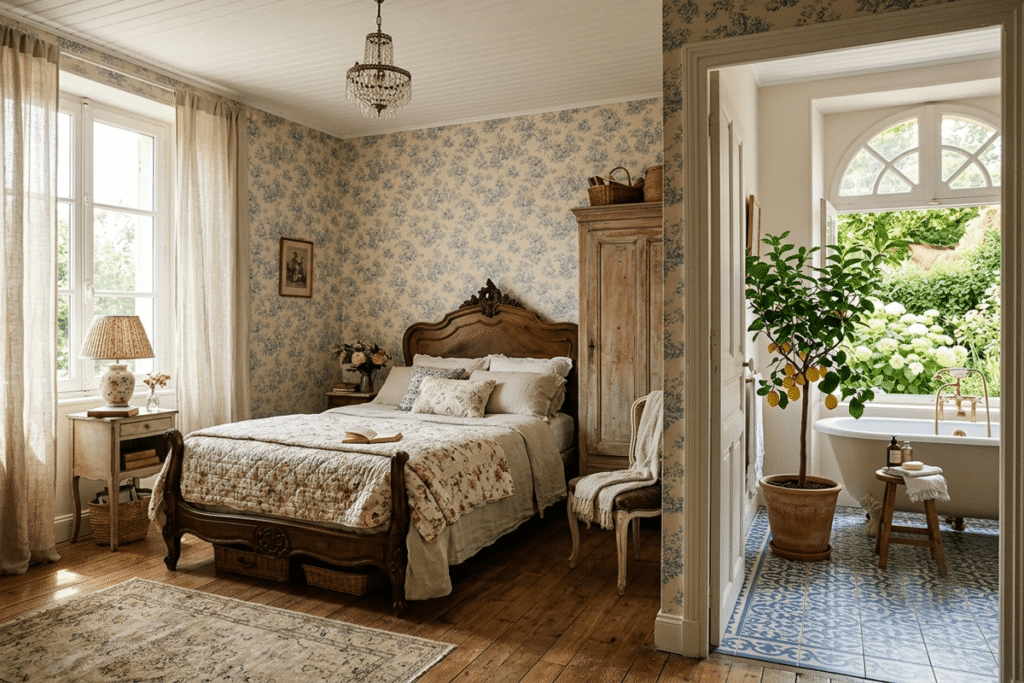
In the bedrooms, Benji preserved nostalgia along with comfort:
- Green wallpaper and bedside table original to the house.
- 1980s table lamp from a local second-hand shop.
- Headboard: an antique mirrored textile from an antique store in Crystal Palace.
- Cushions from Penny Worrall & Neisha Crosland.
- Bedspread: antique cotton quilt. Collection of Accolay ceramics and 1930s oil painting from the Pyrenees.
5.1 Bathrooms: Vintage Meets Fresh Energy
In the bathroom with 1920s vintage floor tiles, Benji added a floral shower curtain – sourced from a nearby town’s homewares shop. Bronze candelabra from Biarritz, painted 1930s column from Birgit Israel London.
The most charming touch?
A lemon tree in the bathroom. “The fragrance of the blossom itself brightens the mood,” explains Benji.
5.2 Landing & Hidden Treasures
Landing at:
- Original pink toile wallpaper.
- Chest of drawers original to house.
- Vintage Indian silk painting.
- Royal Dux polar bear from 1940s.
- Like striped kilim.
- Fauteuil in Galbraith and Paul linen.
6. Designing for Real People: Benji’s Client Philosophy
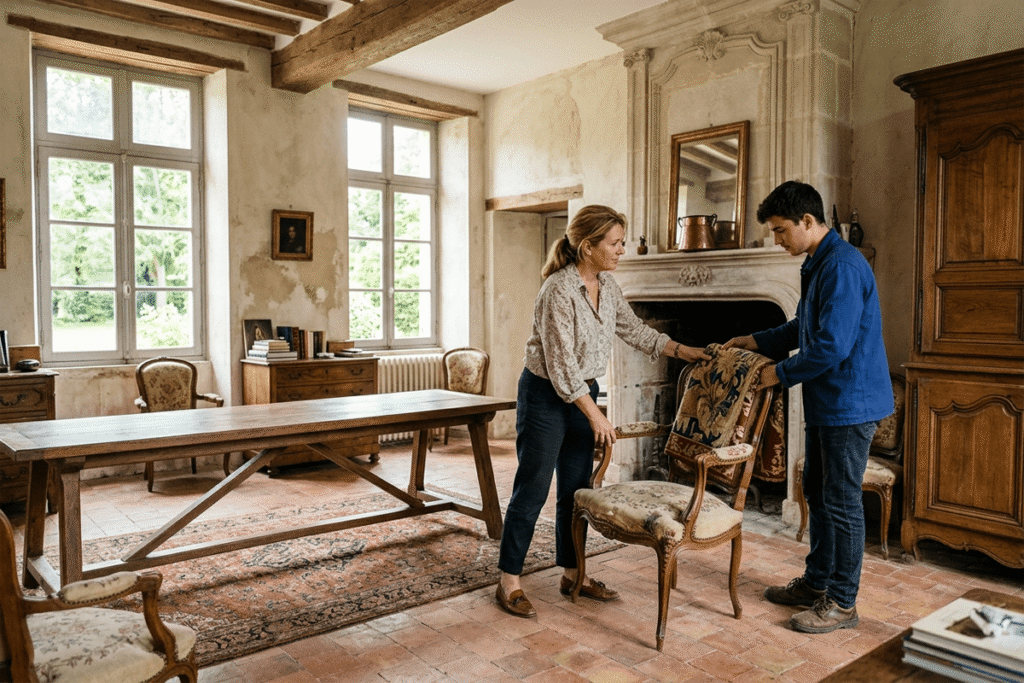
Benji believes: “I create rooms where people can genuinely live.” His style is adaptable, and he always respects the clients’ existing furniture and personality.
His current projects: A grand Victorian villa in the Midlands; a sprawling château in the Pyrenees.
Sometimes knowing when not to touch something is the real design skill,” says Benji.
6.1 French Countryside Lifestyle: A Day in the Manor
Spend a day in this rustic manor house, and you’ll realise what peace really means. The cool morning sun wafts in from a patina-like window, casting a golden glow across the moody green wallpaper and vintage bedspread. In the kitchen, curtains of old Hungarian grain sacks sway in the light breeze, and a large fireplace creates earthy warmth. Breakfast takes place on an antique Basque dining table—fresh baguette, homemade jam and a strong coffee, which is even more flavourful with views of the garden.
By evening, the whole house is engulfed in a warm glow—shadows fall on the Topps Tiles wall light, and old chandeliers make the dining room even more romantic with their brilliance. Dinner is simple—made with locally produced food and served in brocante wine glasses. And when you fall asleep at night leaning against your tall, antique bedhead, it feels as if time has stayed there.
The Rustic Manor House is not just a home; it’s a place to feel—where everything has a past, and every room waits for a new day.
Also Read: 10 Bathroom Decor Ideas: Before & After Bathroom Makeover
7. The Power of Restraint: When Less Is Too Much
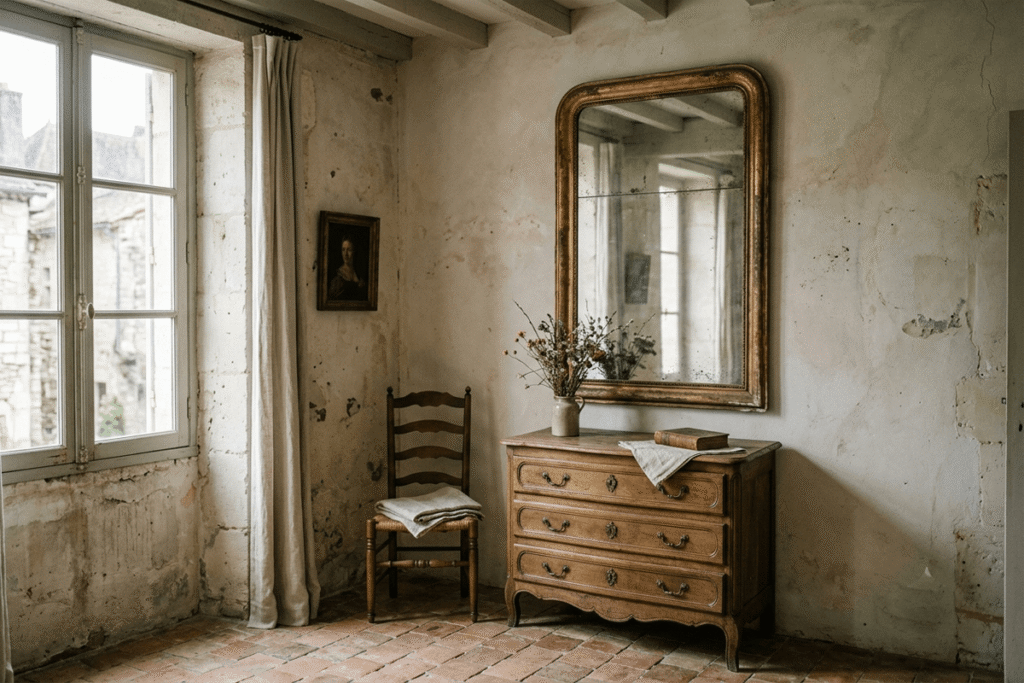
The biggest challenge in interior design is deciding when to stop. Benji Lewis’s manor house is the perfect example of this concept—where the power of intentional simplicity is evident in every corner. When walls are partially stripped, or old paint and tile layers are purposefully retained, they take on a unique beauty and character. When a designer knows where to hold back, that’s where real artistry begins.
Over-decorating or putting it all together is easy, but this home’s rustic charm shows thoughtful restraint. Like preserving the dining room’s Spanish tiles and pink paintwork, or turning a painted cardboard column in the hall into a piece of art—all these decisions reflect a mature aesthetic.
A room truly resonates when fewer elements are thoughtfully selected, and given space to breathe. This design philosophy says that every item deserves a spotlight, and every detail should have a chance to become a story. When a design starts to speak without hesitation—that’s when its true magic is revealed.
Final Thoughts: When a house becomes a story
This rustic manor house is an example of how, when design is done with emotion, not just style, it becomes a home, not just a building. Benji Lewis didn’t just fix a broken house – he put his life into it. In a corner of Southern France, this manor house is now a living story in itself – a perfect blend of history, heart, and home.
This article is inspired by real interior design philosophy, documented designer insights, and location-based architectural storytelling for educational and inspirational purposes.
FAQs About Rustic Manor House Ideas
1. Why is Benji Lewis’ Rustic manor house restoration considered so unique?
Ans.: What makes this project memorable isn’t expensive decoration—it’s the respect shown to the home’s history. Instead of covering old walls or replacing original features, Benji kept many of them exactly as they were. That thoughtful approach gives the house warmth and authenticity that newly renovated homes often struggle to achieve.
2. What is a Maison de Maître?
Ans.: A Maison de Maître is a traditional French rustic manor house that was usually built for wealthy landowners during the 18th and 19th centuries. These homes are known for their balanced architecture, high ceilings, spacious rooms, and elegant proportions. Today, many are lovingly restored while preserving their historical character.
3. Can I recreate this rustic French style in a modern home?
Ans.: Absolutely. You don’t need a centuries-old house to achieve this look. Mixing natural materials, vintage furniture, soft earthy colours, antique accessories, and handcrafted pieces can bring the same relaxed French countryside feeling into a modern home.
4. Why did Benji Lewis keep old walls, paint and tiles instead of replacing them?
Ans.: Older materials often tell the story of a home. By keeping original paint layers, terracotta tiles, and weathered surfaces, the house maintains its personality. Rather than aiming for perfection, the restoration celebrates the beauty of age, craftsmanship, and everyday history.
5. 5. What is the biggest lesson homeowners can learn from this restoration?
Ans.: One of the most valuable lessons is that beautiful interiors don’t always come from buying more. Thoughtful editing, preserving meaningful details, and choosing quality over quantity can create a home that feels both timeless and deeply personal.